
Software built around the way you work.
Custom applications, product engineering, and modernization — designed with you, built in reviewed increments, and handed over with documentation. We work as an independent engineering provider and do not resell or white-label a fixed product.
For business owners and product teams needing custom applications or modernization.
When this service helps
Off-the-shelf tools do not fit
Your process has rules, exceptions, and integrations that generic software cannot model, so your team works around the tool instead of in it.
Aging or fragile applications
An existing system is hard to change, slow, or risky to deploy — and no one is sure what a safe modernization path looks like.
Disconnected systems and manual steps
Data is re-keyed between apps and spreadsheets, with no reliable API or integration tying the pieces together.
What we can help with
Custom Software Development
Applications designed around your specific process, data, and rules.
Enterprise Software Development
Larger systems with roles, workflows, and multi-team requirements.
SaaS Product Development
Multi-tenant products with accounts, billing hooks, and release cadence.
Web Application Development
Browser-based apps and portals for your users, staff, or customers.
Mobile Application Development
iOS and Android apps that share services and data with your web app.
Legacy Software Modernization
Assess an existing system, then refactor or rebuild along an agreed path.
API Development
Build, document, and version APIs other systems and apps can rely on.
Systems Integration
Connect applications, data, and third-party services into one flow.
Software Maintenance & Support
Keep applications patched, monitored, and improving after launch.
How the pieces fit together
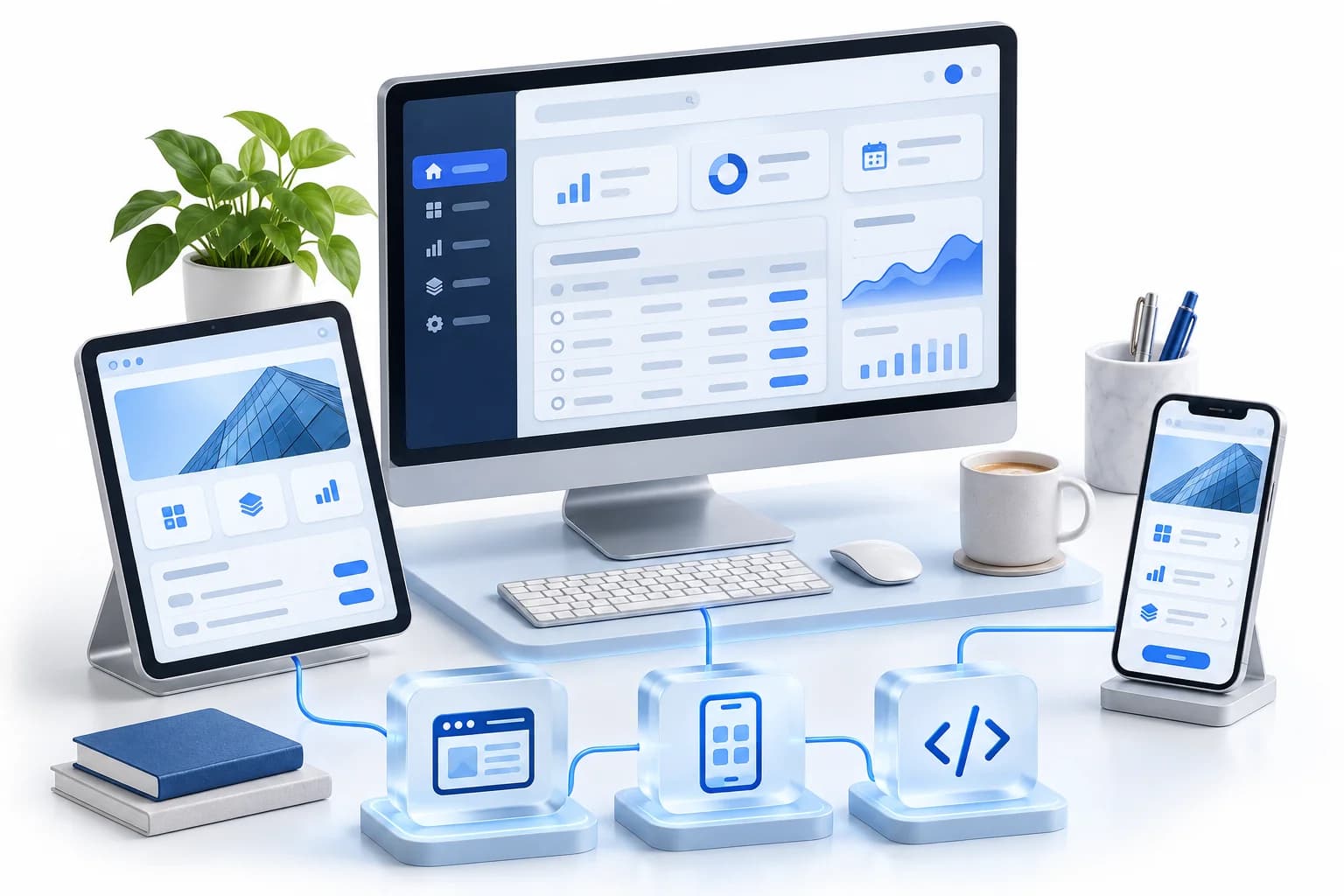
A simple, reviewed view of how clients, the API, business logic, data, and integrations relate in a typical application.
Web and mobile clients send requests to the API. The API calls the business services that hold your application logic. Those services read from and write to the database, and connect out to external integrations such as payments, email, and third-party APIs. This is one example topology — your exact components and boundaries are defined during scoping.
You provide
- Goals, current systems, and access
- Requirements and priorities
- Feedback at each review
We handle
- Architecture, build, and integration
- Testing and code review
- Deployment and documentation
You receive
- Working software in staging then production
- Source code and documentation
- Handover and ongoing support
How we work
- 1
Discovery
We review your goals, users, constraints, and any existing system with you before proposing a build.
- 2
Architecture & prototype
We agree the architecture and show a prototype or key screens for your review and feedback.
- 3
Build & test
We build in reviewed increments, test each one, and confirm changes with you as we go.
- 4
Handover
We verify the result, hand over documentation and access, and agree any support that follows.
What you receive
Assessment and plan
An agreed written assessment of scope, approach, and constraints, with a plan you sign off before build.
Scoped implementation or advisory
The confirmed build — or advisory outputs where the engagement is a review or recommendation rather than a full build.
Verification, docs and handover
Tested software with technical documentation, access, and a clean handover of what was delivered.
People responsible for delivery
Illustrative delivery roles for this service — not named staff or promised staffing. Your actual team is defined in the proposal.
Owns the architecture, key technical decisions, and how the system fits your constraints.
Builds, tests, and documents the application in reviewed increments.
Coordinates scope, reviews, and communication so you know what is happening and what is next.
Track progress, review changes, and stay aligned through your project portal — projects, milestone progress, published updates, approvals, billing, and messages in one place.
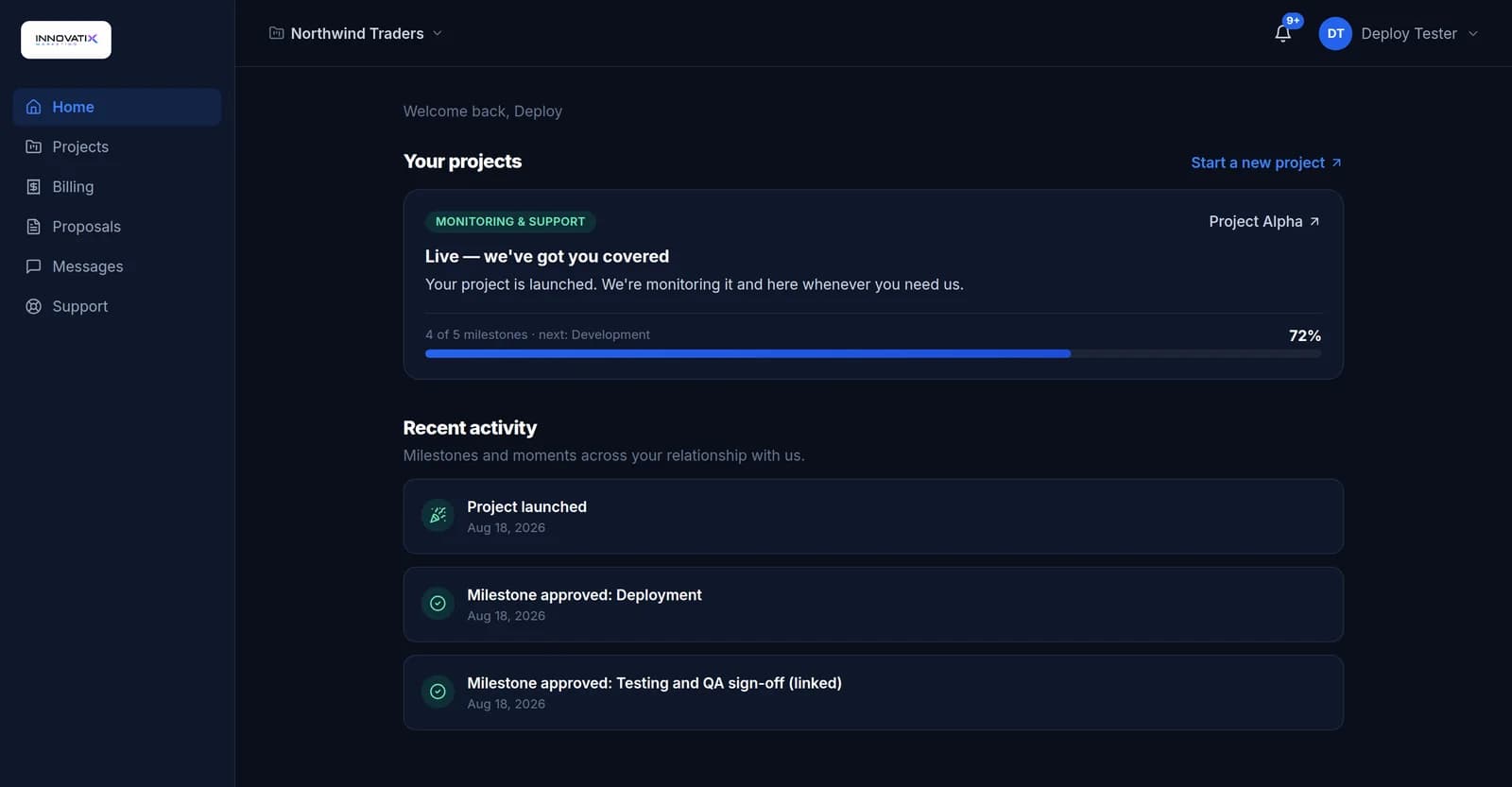 Client portal · demo
Common questions
- Who owns the software and source code?
- Ownership is defined in the agreement. We set out in writing what transfers to you, what uses open-source or third-party licenses, and any components that remain licensed rather than owned — so there are no surprises at handover.
- Can you work with our existing application?
- Yes. We assess the current system first — its code, data, and constraints — before recommending any change. Depending on what we find, that may mean targeted fixes, a staged modernization, or a rebuild, and we explain the trade-offs rather than assuming one path.
- Can you guarantee a fixed price and date up front?
- Not blindly. We scope discovery first so the estimate reflects real requirements. Where scope is clear we can fix it; where it is uncertain we agree how changes are handled, so the number stays honest instead of padded or over-promised.
- Systems and services you need to connect
- Users and roles the application must support
- Constraints of any current application (code, data, platform)
- Ownership and licensing expectations for the result
Let’s talk about your software.
Tell us what you want to build or improve, and we’ll help you scope a realistic path forward.