Legacy Software Modernization
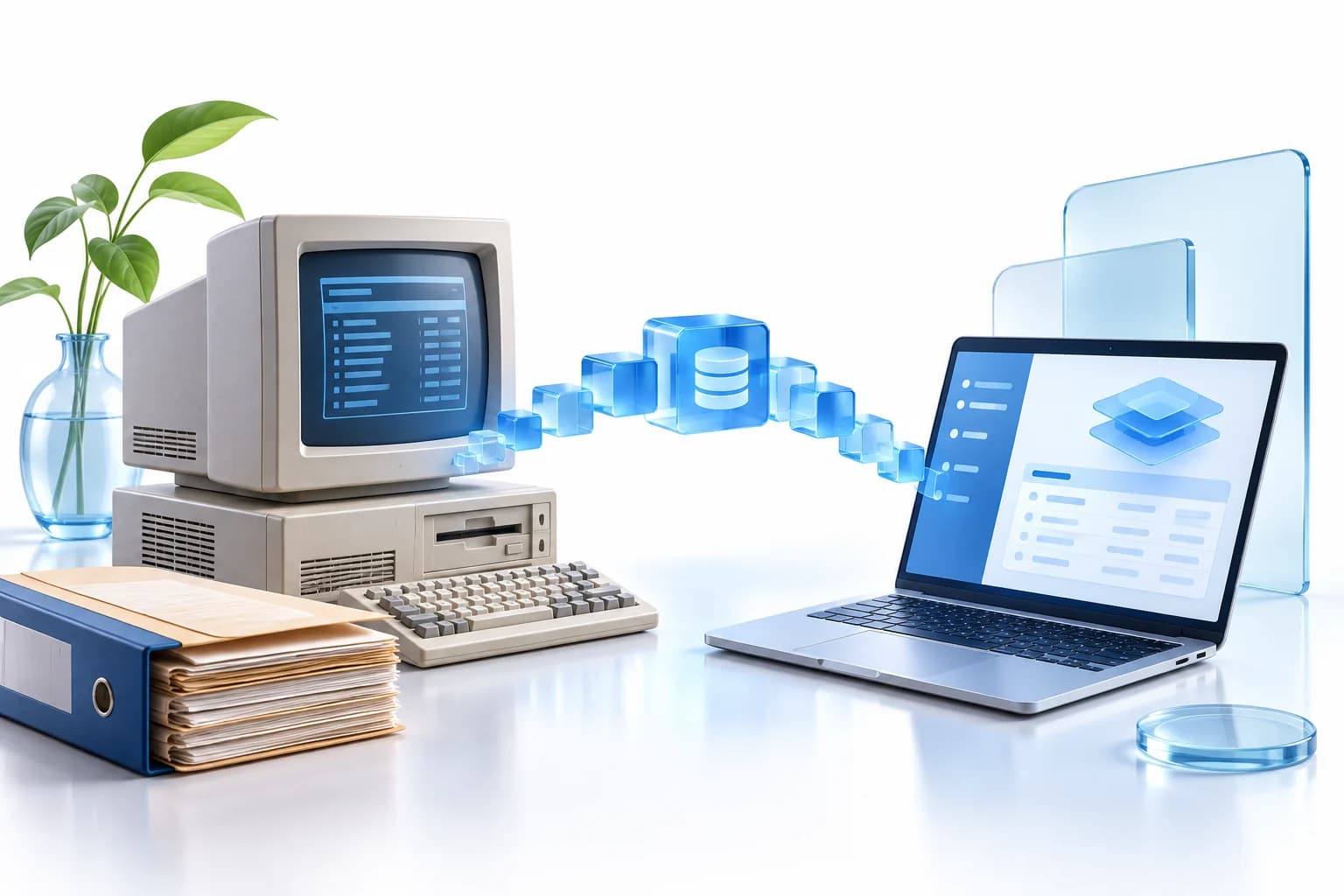
We modernize aging systems in place, preserving the logic that works while replacing what holds you back.
- Dependency and risk mapping before changes
- Incremental migration, no big-bang cutover
- Behavior kept intact under regression tests
Problems we solve
The system is a black box
Undocumented behavior and business rules buried in old code mean no one can safely change it. Modernization has to start by making the current system understood.
Big-bang rewrites are high-risk
Replacing everything at once means a single cutover where everything must work perfectly — a bet businesses regularly lose.
Data migration is where projects die
Decades of accumulated, inconsistent data rarely map cleanly to a new model. Underestimating migration derails timelines and trust.
The workflow
You provide
- Access to legacy system
- Existing documentation
- Downtime windows
We handle
- System assessment
- Rebuild and data migration
- Cutover planning
You receive
- Modernized system
- Migrated data
- Cutover and rollback plan
How we approach it
Legacy systems do not fail loudly — they slowly tax the business: fragile integrations, no one who fully understands them, and every change a gamble. But ripping them out in one big-bang cutover is how modernization projects fail spectacularly.
We modernize legacy software the safe way: understand the current system, replace it in controlled increments behind a stable interface, migrate data carefully, and keep a rollback plan at every step — so the business keeps running the whole time.
Understand before you replace
We document the current system’s real behavior, data, and integrations, and capture the business rules that actually matter — so nothing critical is lost in the move.
Incremental, reversible replacement
We replace the legacy system piece by piece behind a stable interface (a strangler-fig approach), so each step is small, verifiable, and reversible instead of one terrifying cutover.
Careful, verified data migration
We profile, clean, and migrate data with reconciliation and verification against the source, and always into a fresh target first — never overwriting the old system blind.
What you get
- An assessment of the current system, data, and integrations
- A phased modernization plan with reversible increments
- Incremental replacement behind a stable interface
- Verified data migration with reconciliation
- Automated tests, CI/CD, and monitoring on the new system
- Cutover, rollback plan, and post-migration support
Technologies & integrations
Our delivery process
- 01Assess
Document the current system, data, rules, and integrations.
- 02Plan
Sequence reversible increments and a data-migration strategy.
- 03Strangle
Replace piece by piece behind a stable interface.
- 04Migrate
Move and reconcile data into fresh targets, verified.
- 05Cut over
Switch with a rollback plan, then support and stabilize.
Frequently asked questions
Do we have to replace everything at once?
No — and we recommend against it. We use an incremental "strangler-fig" approach, replacing the legacy system piece by piece behind a stable interface so each step is small and reversible.
What about our years of existing data?
We profile, clean, and migrate it with reconciliation against the source, always loading into a fresh target first and verifying before any cutover. Data migration is treated as a first-class part of the project, not an afterthought.
Will the business keep running during modernization?
Yes — that is the point of the incremental approach. Operations continue throughout, with each change verified and reversible.