
Bring your operations into one connected system.
ERP, CRM, warehouse, order, and portal systems that share agreed data — so departments, locations, and finance work from the same records instead of separate spreadsheets.
For operations teams connecting departments, locations, channels, and finance.
When this service helps
Fragmented systems
Orders, inventory, warehouse, and finance live in separate tools that do not talk to each other, so the same work is re-entered in several places.
Manual reconciliation
Your team spends hours each week matching stock counts, order status, and ledgers by hand — and errors still slip through.
No single source of truth
Different teams report different numbers because no domain has one agreed, authoritative set of records to trust.
What we can help with
ERP Development
Connect core operational processes — purchasing, inventory, orders, and finance — on a shared data model.
CRM Development
Manage customers, contacts, and the sales pipeline with history that stays consistent across teams.
Warehouse Management Systems
Track locations, picking, packing, and movements so physical stock matches the system.
Inventory Management Systems
Keep stock levels, costs, and availability accurate across locations and channels.
Order Management Systems
Capture, route, and update orders from intake through fulfillment and status.
Customer Portals
Give customers self-service access to orders, documents, and account activity.
Vendor Portals
Let suppliers submit, confirm, and track purchase orders and documents in one place.
Finance & AR Systems
Invoicing, receivables, and reconciliation tied to the orders and records that created them.
Business Operations Platforms
Bring the modules together into one operational platform with shared data and reporting.
How your operations connect
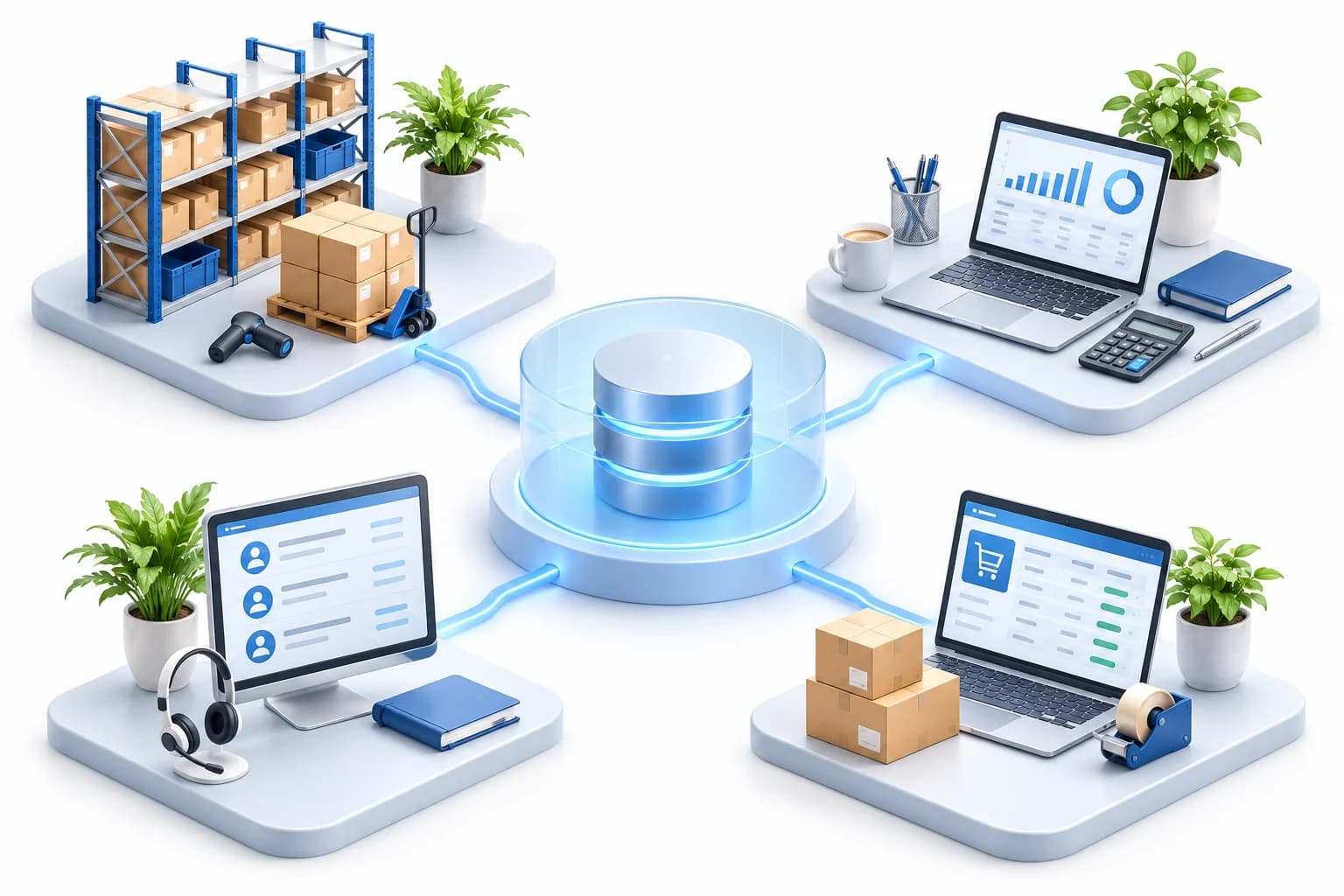
A simple view of how a shared-data foundation links your orders, inventory, warehouse, portals, and finance.
Each module reads agreed records from, and writes updates back to, a single logical source for its domain — so orders, inventory, warehouse, portals, and finance stay consistent. This is a logical foundation for data ownership, not a claim that every business must run one physical database; the right boundaries are scoped per engagement.
You provide
- Your processes and current tools
- Data and account access
- Sign-off on customer-facing changes
We handle
- System design and configuration
- Data mapping and integration
- Testing and rollout
You receive
- Connected operations across teams
- One shared source of information
- Training and support
How we work
- 1
Map operations
Work with your team to document how orders, inventory, warehouse, portals, and finance actually run today, and where data is duplicated or breaks.
- 2
Define ownership
Agree which system is authoritative for each domain — the single source of truth — and how records flow and sync between modules, for your review and sign-off.
- 3
Build modules
Build or connect the agreed modules against the shared data model, in scoped increments you can review and test along the way.
- 4
Migrate & validate
Move existing data with trial imports, reconcile it against your source records, and confirm the results with you before go-live.
What you receive
Assessment and plan
A clear review of your current systems, agreed data ownership per domain, and a plan for how modules connect.
Scoped implementation or advisory
The confirmed modules, integrations, or advisory outputs built against the shared data model.
Verification, documentation & handover
Migration and reconciliation results, how the system works, and a documented handover to your team.
People responsible for delivery
Illustrative delivery roles for this service — not named staff or promised staffing. Your team is defined in the proposal.
Designs the data model, module boundaries, and ownership so systems share records consistently.
Builds the modules, connectors, and synchronization between your systems.
Coordinates scope, migration, review checkpoints, and handover with your team.
Track progress, review changes, and stay aligned through your project portal — projects, milestone progress, published updates, approvals, billing, and messages in one place.
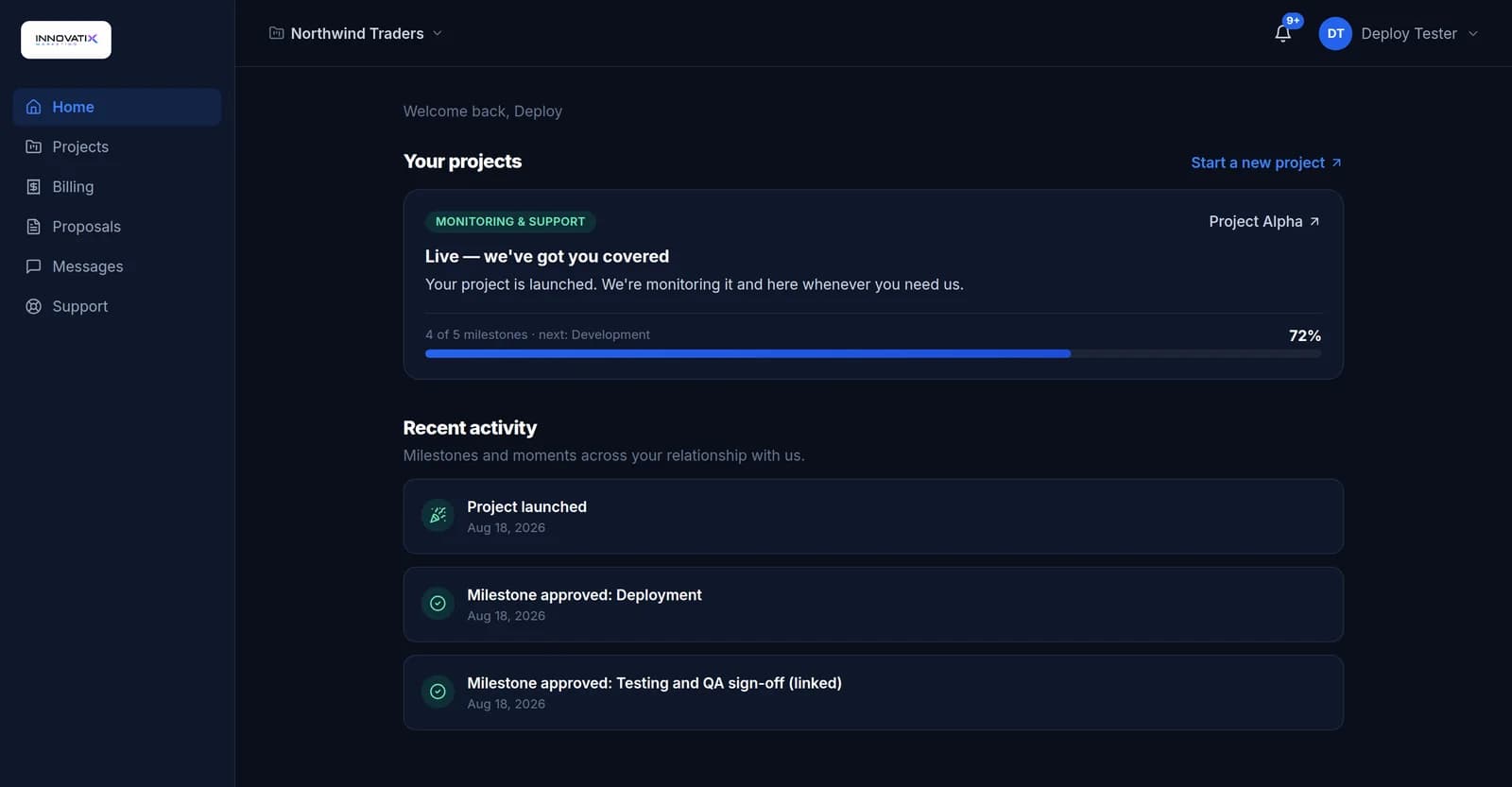 Client portal · demo
Common questions
- Should we replace our systems or integrate them?
- We assess first. Replacing working systems is often unnecessary — in many cases the better result is connecting what you have around agreed data ownership. We recommend the lower-risk path for your situation, not a default rebuild.
- How do you handle data migration?
- With trial imports and reconciliation. We import into a test environment, reconcile the results against your source records, and confirm them with you before anything goes live — so migrated data is checked, not assumed.
- Do we need a single central database?
- No. We work from a single logical source of truth for each domain — the authoritative record for orders, inventory, finance, and so on. That can be one system or several connected systems; the right boundaries are decided during scoping.
- Current systems you use for each operation
- Which system is authoritative for each domain (orders, inventory, finance, etc.)
- Approximate data volume to migrate
- User roles and your acceptance criteria for go-live
Tell us how your operations run today.
Let’s talk about the systems you use, where data breaks, and what a connected setup would look like for your team.