Data Engineering for a Single Source of Truth
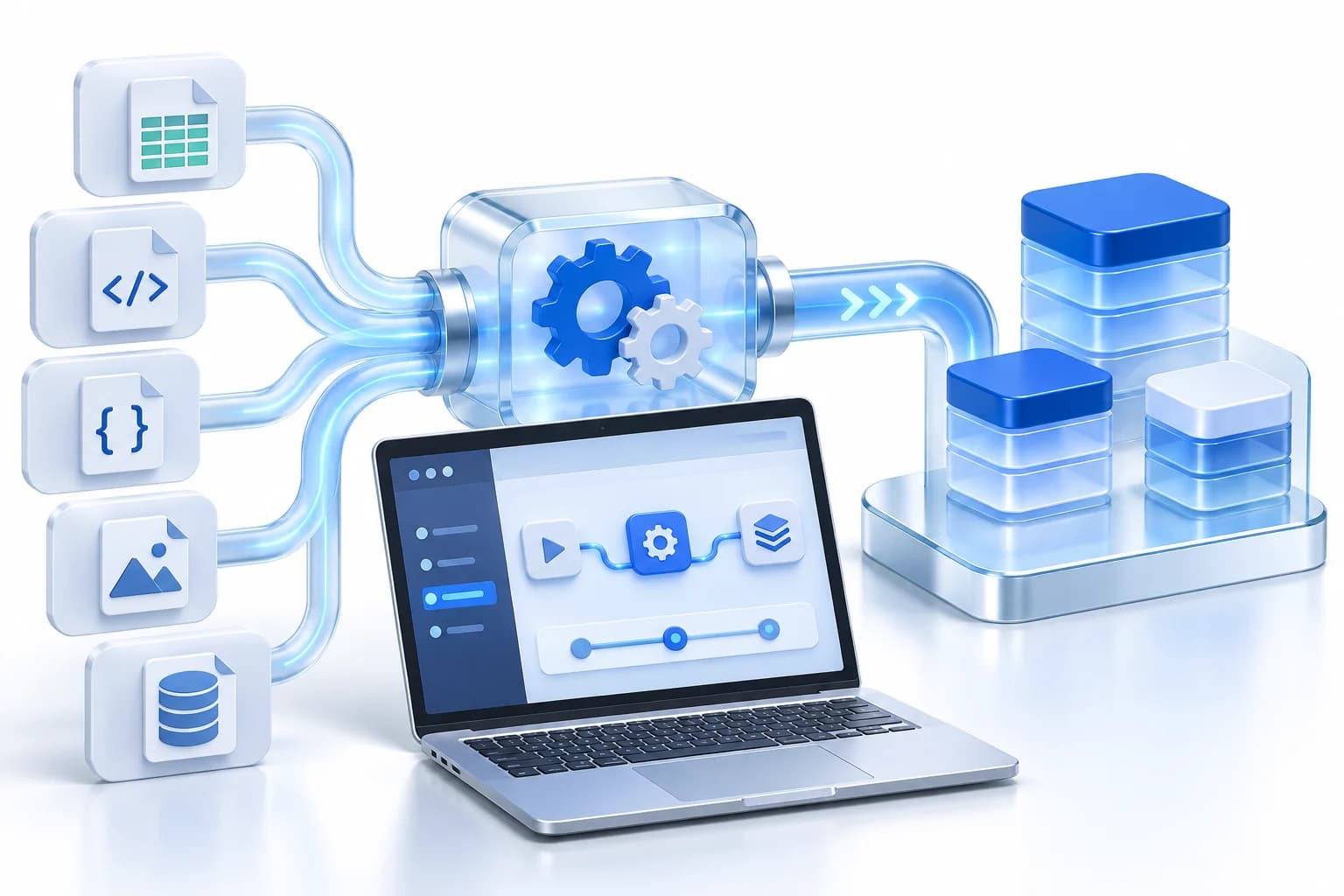
We consolidate scattered systems into one modeled, documented data layer your teams can trust as a single source of truth.
- Unified data models across source systems
- Documented schemas and data lineage
- Validation and reconciliation checks
Problems we solve
Numbers never match between systems
Finance, operations, and marketing each pull from a different source and get different answers. Without a modeled source of truth, every meeting starts by arguing about whose number is right.
Reports break silently
A schema changes upstream, a nightly job fails, and nobody notices until a report is wrong in front of leadership. Pipelines without tests and alerts erode trust in every metric.
Data is trapped in operational systems
The ERP, marketplace, and CRM each hold part of the picture, but querying them directly is slow, risky, and impossible to join. Analysis stalls before it starts.
The workflow
You provide
- Source system access
- Current schema notes
- A technical point of contact
We handle
- Pipeline design and build
- Data modeling and schemas
- Monitoring and recovery
You receive
- Reliable data pipelines
- Documented data models
- Operational runbooks
How we approach it
Analytics are only as good as the data underneath them. Data engineering is the unglamorous foundation that makes dashboards, reports, and AI trustworthy: reliable pipelines, a clean data model, and one place the whole business agrees is correct.
We build that foundation — moving data out of scattered operational systems into a governed, modeled store, with tests and monitoring so the numbers are right every morning, not just the day you built the report.
Reliable ingestion from every source
We build pipelines that pull from your operational systems, marketplaces, and third-party APIs on a schedule, with retries, idempotency, and clear failure alerts — so data lands completely and on time.
A modeled, documented warehouse
Raw data is transformed into clean, well-named, tested tables that mirror how the business thinks — orders, customers, inventory, finance — so anyone can query with confidence.
Tested and monitored, like software
Transformations have data tests (uniqueness, freshness, referential integrity) and monitoring, so a broken upstream change surfaces as an alert, not a wrong board slide.
What you get
- Source inventory and a target data model documented up front
- Ingestion pipelines with retries, idempotency, and failure alerting
- A modeled, tested warehouse (staging → core → marts)
- Data-quality tests: freshness, uniqueness, referential integrity
- Documentation and a data dictionary for self-service
- Monitoring, runbooks, and ongoing support options
Technologies & integrations
Our delivery process
- 01Discovery
Inventory sources, define the questions the business needs answered, and design the target model.
- 02Ingestion
Build reliable, monitored pipelines from each source system.
- 03Modeling
Transform raw data into clean, tested, documented tables.
- 04Validation
Add data tests and reconcile against source-of-truth systems.
- 05Handover
Document, monitor, and enable self-service analytics.
Amazon Sellers — a connected operational data model
Frequently asked questions
Do we need a data warehouse or can we query our app database directly?
Querying a production database directly is slow, risky, and hard to join across systems. A separate modeled warehouse isolates analytics load, unifies sources, and gives you clean tables built for questions rather than transactions.
How do you keep the data trustworthy over time?
Every transformation ships with data tests (freshness, uniqueness, referential integrity) and monitoring, so upstream changes and failed jobs raise alerts before they reach a report.
Can you work with the systems we already run?
Yes — we build ingestion from ERPs, marketplaces, CRMs, payment processors, and third-party APIs, and land it in a warehouse you own.