
Carrier & Shipping Integrations
We connect your store and marketplaces to your carrier accounts so labels, rates, and tracking flow through one pipeline.
- Wire UPS, USPS, and FedEx account credentials
- Automate label buying and tracking writeback
- Map carrier codes to marketplace requirements
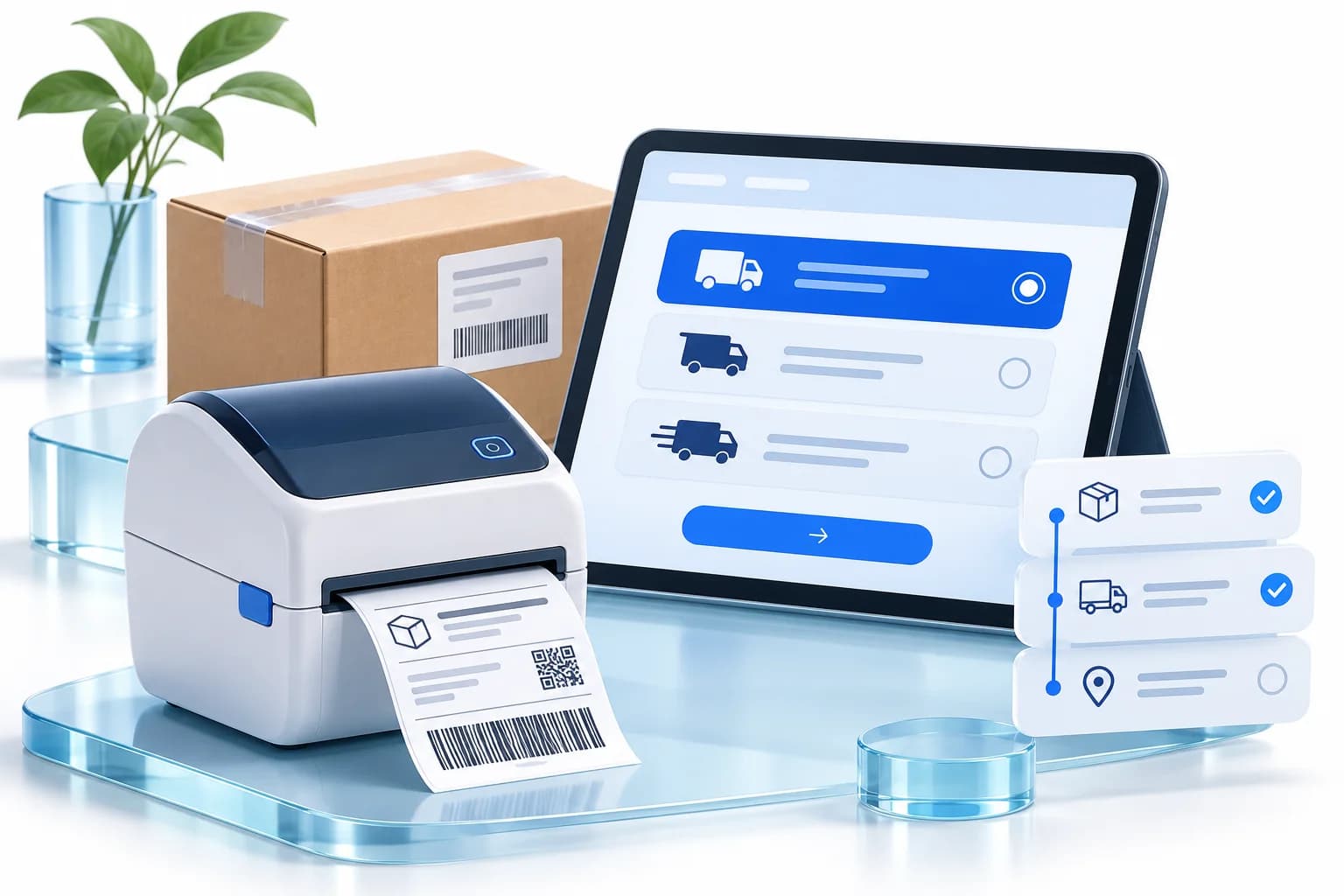
Problems we solve
Manual labels and tracking
Copying between carrier portals and your systems is slow and error-prone. We automate rate, label, and tracking flows where the carrier supports them.
No single view of shipments
Tracking events live in carrier silos. We ingest and normalize them so your systems and customers see consistent status.
Fragile integrations
Rate limits, retries, and duplicate shipments cause real cost. We build in protection, audit logs, and reconciliation.
The workflow
You provide
- Carrier accounts & shipping rules
- Package & rate preferences
- Test orders & access
We handle
- Integration, testing & error handling
- Rule setup & label mapping
- Tracking sync & retries
You receive
- Connected shipping workflow
- Automated labels & tracking
- Error log & review notes
How we approach it
Connect shipping to the systems your team already uses. We integrate supported carrier services — DHL eCommerce, UPS, USPS, FedEx and others by agreement — for rates, labels, tracking, shipment updates, and operational visibility across your store, marketplace, ERP, or warehouse.
Supported functions depend on the carrier product, your account, region, contracts, and the available APIs. We confirm what’s possible for your setup before we scope the build.
Setup and connectivity
Carrier account connectivity, credentials/authorization, service and package mapping, and sandbox/test configuration.
Rates, labels, and tracking
Supported rate retrieval, shipment creation, label generation/printing, void/cancel where supported, and normalized tracking ingestion with marketplace shipment confirmations.
Reliability by design
Duplicate-shipment protection, retries, rate-limit handling, audit logs, reconciliation, monitoring, and a documented support handover.
What you get
- One agreed carrier connection (more by scope)
- Service and package mapping
- Supported label and tracking flows
- Returns labels / customs documents where defined
- Duplicate protection, retries, and reconciliation
- Testing, documentation, and support handover
Technologies & integrations
Our delivery process
- 01Scope
Confirm carriers, products, regions, and supported functions.
- 02Connect
Set up account connectivity and sandbox configuration.
- 03Build
Implement rates, labels, tracking, and mappings.
- 04Harden
Add duplicate protection, retries, and reconciliation.
- 05Handover
Test, document, and hand over monitoring/support.
Carrier integrations (USPS, UPS, FedEx) in a live operations platform
Frequently asked questions
Which carriers can you connect?
Commonly DHL eCommerce, UPS, USPS, and FedEx, plus others by agreement. Exact capabilities depend on the carrier product, your account, region, and available APIs — we confirm this in scoping.
Can you do rates, labels, and tracking all at once?
Where the carrier supports them, yes. Some functions (certain returns, customs documents, specific services) are defined separately in scope.
How do you prevent double-charging or duplicate labels?
We build in idempotency/duplicate-shipment protection, retries, audit logging, and reconciliation as part of the integration.