
Kubernetes Engineering
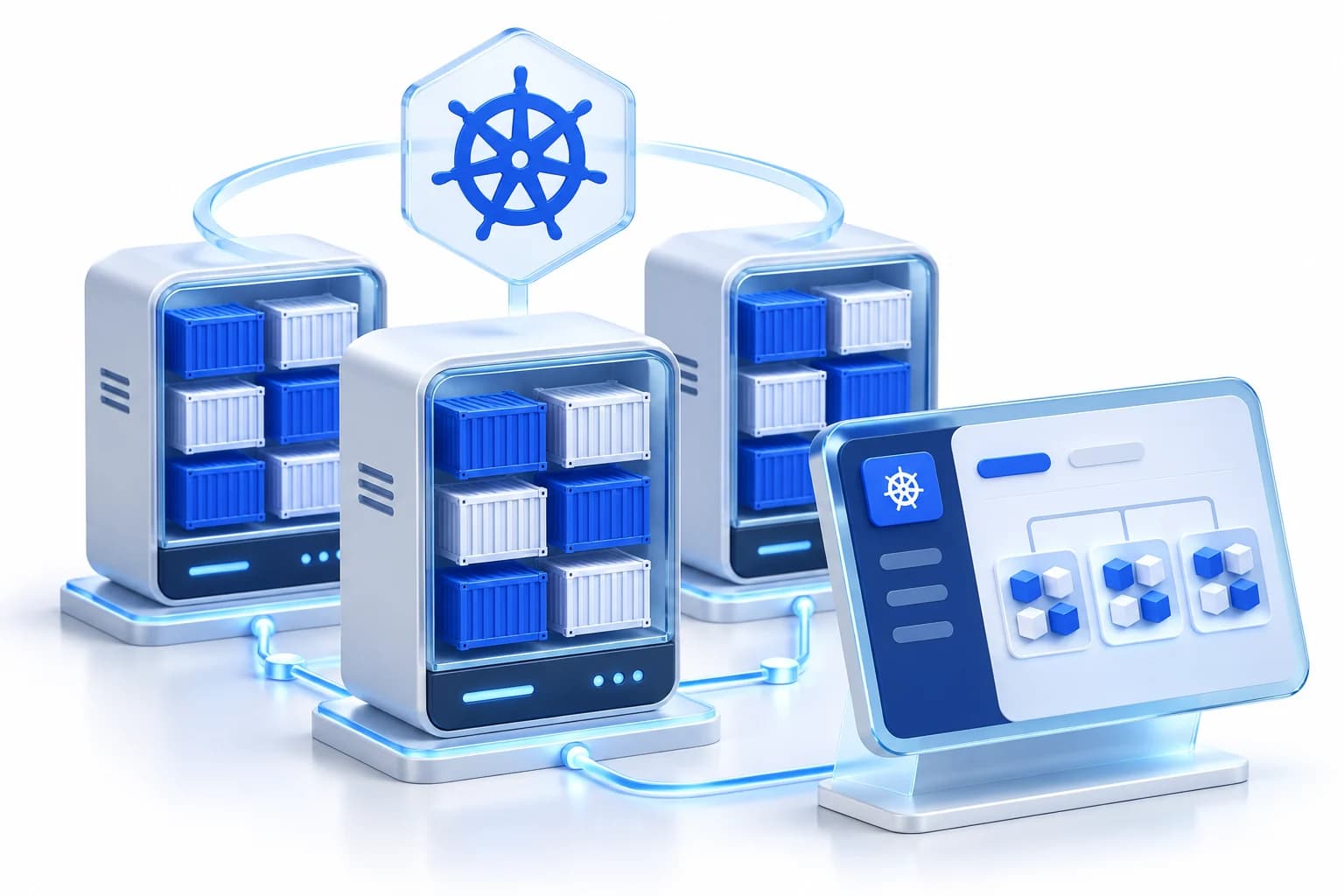
We set up and operate Kubernetes clusters with defined workloads, networking, and controlled rollout of changes.
- Cluster and node pool setup
- Workload manifests and resource limits
- Rolling deploys with health checks
Problems we solve
Kubernetes adopted too early
Teams reach for Kubernetes for prestige, not need, and drown in complexity. The first question is whether you actually need it.
Insecure or unobservable clusters
Clusters without proper security, resource limits, and observability become fragile and dangerous at scale.
Operational burden with no owner
Kubernetes demands real operational skill. Without it, clusters rot and incidents multiply.
The workflow
You provide
- Container images
- Resource limits
- Scaling targets
We handle
- Cluster configuration
- Workload deployment
- Autoscaling setup
You receive
- Running cluster
- Deployment manifests
- Scaling rules
How we approach it
Kubernetes is a powerful way to run containerized applications at scale — and a heavy, complex tool that many teams adopt before they need it. Done right, it gives you scalability, resilience, and portability; done wrong, it adds operational burden you cannot afford.
We design, build, and operate Kubernetes when it genuinely fits — secure, observable, and right-sized — and we will tell you honestly when a simpler platform would serve you better.
Right tool for the job
We assess honestly whether Kubernetes fits your scale and team; when it does, we architect it properly, and when it does not, we recommend the simpler platform.
Secure, observable clusters
Least-privilege access, network policy, resource limits, and observability built in, so clusters are safe and debuggable.
Codified and operable
Defined as code with CI/CD, autoscaling, and runbooks, so the cluster is reproducible and your team can actually operate it.
What you get
- A fit assessment (do you need Kubernetes?)
- A secure, right-sized cluster design
- Deployments, autoscaling, and resource limits
- Network policy, RBAC, and secrets handling
- Observability (metrics, logs, alerts)
- Infrastructure as code and operational runbooks
Technologies & integrations
Our delivery process
- 01Assess fit
Decide honestly if Kubernetes is warranted.
- 02Design
Architect a secure, right-sized cluster.
- 03Build
Provision as code with autoscaling and limits.
- 04Observe
Add metrics, logs, alerts, and policy.
- 05Operate
Document runbooks and support.
Frequently asked questions
Do we actually need Kubernetes?
Often not — many workloads run better on simpler platforms (managed containers, serverless). We assess honestly and only recommend Kubernetes when its scale and portability benefits genuinely outweigh its operational cost.
Can you operate our existing cluster?
Yes — we can take over, harden, and operate an existing Kubernetes setup, adding the security, observability, and runbooks it may be missing.
Managed Kubernetes or self-hosted?
Usually managed (EKS/AKS) to reduce operational burden; self-hosted only where there is a specific reason. We recommend based on your team and needs.